
When ChatGPT showed up, students stuck to it like a magnet. Type any question or assignment prompt, and within seconds, you’ll get a quick response. This was perfect for students who wanted an easy shortcut through their work or projects. But for teachers, it caused frustration.
Many school districts that have chosen to block ChatGPT worry that students will use it to cheat on homework or plagiarize essays. Some students use AI because they’re running out of time “on assignments,” or just need a prompt, “they would” copy what it gives them, then call it a day. Most can agree that that’s not really learning.
Experts believe that if you use AI the “right way”, it could “be useful” to students as long as they can be responsible with AI. According to edweek.org, “experts don’t recommend banning AI tools. Instead, they say students should be taught to use them appropriately.” This means teaching students how to use ChatGPT to break down complicated subjects or for brainstorming, not for copying full assignments.

This debate isn’t new; it’s similar to when calculators were introduced. Back then, many teachers worried that students would rely on calculators and not be able to do the math on their own. The calculator then went on to be an everyday tool in math class. Just like how students had to learn how to use computers, email, and the internet in school, back then, teachers would worry about them just searching for the answers online when they were used to just pen and paper. Now, schools use the internet every day and have adapted to it by changing their work and locking tabs. Experts think that in the future, it could also happen with ChatGPT. Therefore, ChatGPT can be included in everyday learning.
For schools, the most important challenge is trying to figure out how to keep students honest while accepting that AI isn’t going anywhere anytime soon.
“Now ChatGPT has gotten better at copying the students’ style, but it still can’t do what we require of students with any kind of detail,” said Barry Peters, an English teacher at Athens Drive. In the future, AI will most likely be used in every working station, including writing, marketing, coding, and research. If students don’t learn about these tools now, they might be behind later on. At the same time, teachers still need to make sure students are learning the right skills and not letting AI do all the hard work.
Whether ChatGPT becomes a problem or a helpful tool doesn’t depend on the AI; it depends on how the students want to approach it, whether they wanna actually learn and only use it for help, or they don’t want to learn at all and just tell ChatGPT to “humanize it.”
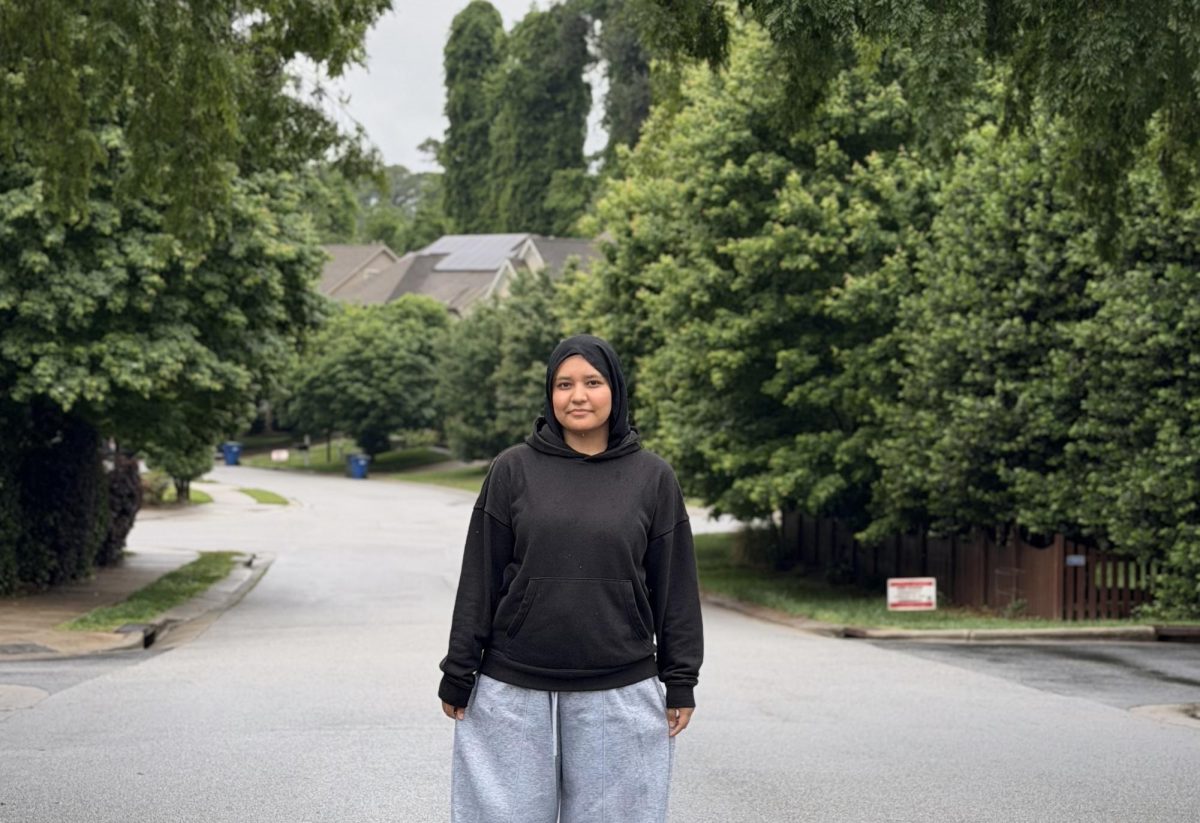
“I think blocking ChatGPT is pointless because kids are just gonna use another AI website to cheat. Blocking it isn’t stopping anyone,” said Juliana Lallathin, a junior at Athens Drive. There are ways to block ChatGPT but schools should figure out how to “adapt” to AI because students will find a way. Many teachers have found that it does not matter if the school blocks ChatGPT, they’ll find another way to use it. For example,they’ll use their personal device where the school can’t block AI.
Artificial intelligence will continue to move forward, whether schools choose to be ready or not. Banning ChatGPT may solve the problem for a short period of time, but it doesn’t answer the question of how schools should adapt to this new way of learning instead of running from it.