
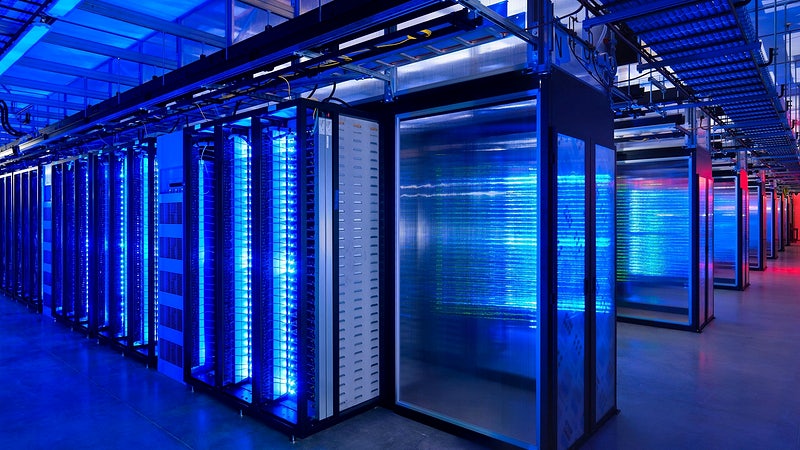
Natelli Investments has submitted a proposal to make the “New Hill Digital Campus,” which would be located in Apex and serve as a data center. The nearby community has been protesting the data center due to their concerns about how it may affect the environment and community health.
Data centers are often large facilities that store, process, and distribute data. They require large amounts of power to operate smoothly, and using this amount of power creates high temperatures. If the machinery overheats, it could cause critical malfunctions, server shutdowns, and corruption of data.
This being the case, it is extremely important to cool down the data centers, which leads to Apex’s first concern: water consumption. Large data centers can use upwards of 5 million gallons of water per day, about 1.8 billion gallons annually. And with New Hill being built on a 190-acre property, it is considered a large data center.
“Yes, it uses a lot of water, but also you send it right back up to the company to repurify it,” said Tyler Latta, science teacher. “If you’re directly dumping it into lakes and ponds without letting it cool first, there’s definitely some effects on the environment.”
Natelli aims to solve this by using non-potable wastewater, but that brings its own concerns. 80% of water used in data centers evaporates, and community members claim that it could release harmful contaminants into the atmosphere.
“Doesn’t seem like a bad use for wastewater,” said Tyler Latta, “As long as they’re conscious about what they do with the wastewater after.”
The towns of Cary and Natelli are still talking about whether or not the wastewater facility will be able to provide this water for cooling. There are other sustainable cooling options available for a higher upfront cost, which have thus far not been chosen.
The community is also concerned about the effect the facility will have on their money, as it will likely strain the power grid and cause electricity bills to go up for nearby communities.
“There’s a lot of like economic impacts,” said Latta.
Along with power from the grid, the facility will also have 80 three-megawatt generators, which would be tested once a week, as well as during power outages. People are concerned about the diesel pollution this could cause.
This pollution could cause health problems for nearby residents, and the noise and light pollution may also hurt Apex’s overall aesthetic, another major concern for many Apex residents. Natelli has said they will implement “state-of-the-art” technology to limit noise and light pollution, but the specifics have not been mentioned.
“Noise pollution is a big deal, having a constant humming drone behind your house of fans going is a big deal… That’s the primary reason that it should not be in a city,” said Latta.
People who live near data centers often report problems accessing water and electricity, as well as a much poorer sleep quality due to sounds and lights. This is especially true with younger children, who already have a hard time falling asleep. People who live near data centers can also develop or worsen asthma due to the air pollution.
In opposition to the data center, Apex residents have made a Facebook group and a petition, which quickly gathered more than 2000 signatures. They have also held a few meetings, including one on Nov. 12, in which residents voiced their opposition to the construction, focusing on noise pollution.
“We’re going to focus tonight on sound,” an Apex resident said, “but please, tell us you’re not just thinking about our ears.”